


The most important outdoor upgrade a family can make isn’t the most expensive one — it’s the one that actually gets used. A beautifully landscaped yard might look impressive, but if the family isn’t in it, its value stops at the fence line. A backyard sports court earns its place every single day.
For Austin families with children of different ages, the challenge of shared physical activity is real. A six-year-old and a sixteen-year-old don’t naturally gravitate toward the same activities. Parents with full-time jobs and busy schedules need exercise that’s accessible, not aspirational. A multi-sport court resolves all of this — and Sundek of Austin builds and resurfaces multi-sport courts across Central Texas with the expertise to design a surface that genuinely fits your household.
Why Shared Physical Space Matters
Family health research consistently shows that children are more physically active when their parents model active behavior — and parents are more likely to be active when the environment makes it easy. A backyard court creates a feedback loop: kids see adults playing, adults see kids playing, and the court becomes the default gathering point rather than an afterthought.
There’s also the social dimension. A backyard court doesn’t just serve your immediate family — it becomes a neighborhood anchor. It’s where friends come after school, where weekend barbecues turn into pickup games, where the family across the street starts showing up on Sunday afternoons. That kind of informal community isn’t something you can engineer directly, but the right outdoor space creates the conditions for it.
Courts That Serve Every Age and Ability
One of the most practical advantages of a well-designed multi-sport court is its generational range. Consider what a single surface can support:
Young children develop fundamental motor skills — dribbling, throwing, spatial awareness — on a safe, cushioned acrylic surface that’s far more forgiving than asphalt or bare concrete.
Tweens and teenagers have an activity that earns their full attention, without a screen. Competitive games of one-on-one, pick-up pickleball matches, or informal tennis rallies all require real engagement — and they build fitness without feeling like exercise.
Adults maintain cardiovascular health and lower-body strength through regular court activity without commuting to a gym or securing a reservation at a public park.
Older family members find pickleball especially accessible — a sport valued for its lower physical impact, social nature, and manageable learning curve at any age.
The same 30-by-60-foot surface can serve all of these groups in the same week, often the same day.
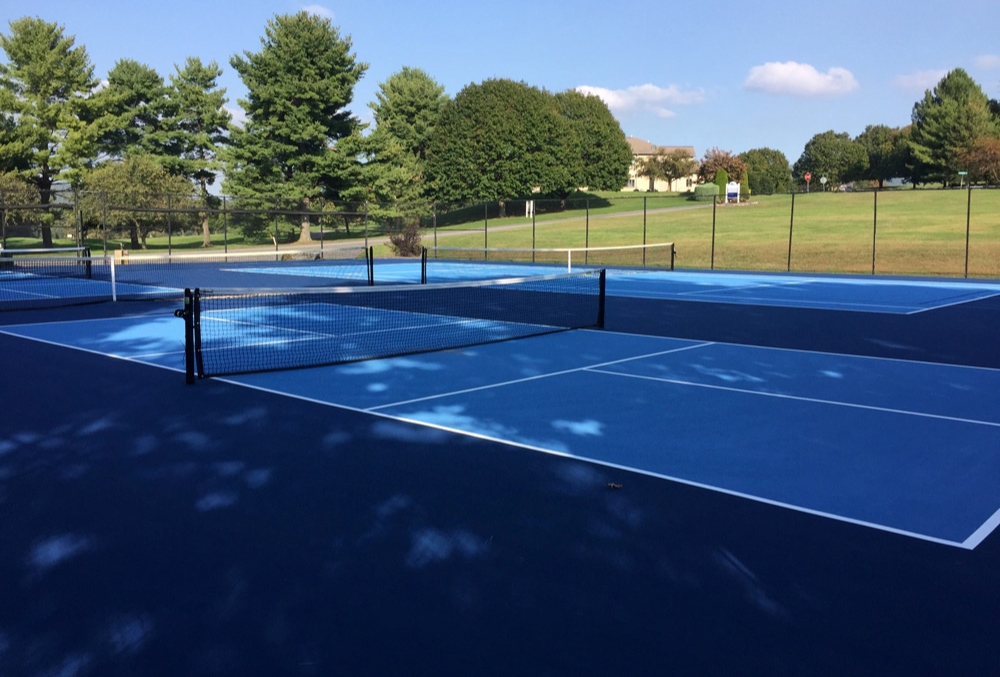
The Friction Problem and How Courts Solve It
One of the underappreciated reasons families don’t exercise together more often is friction — the gap between intention and action. Getting the whole family to a public park requires scheduling, loading up equipment, dealing with full courts and wait times, and making a round trip. When everything lines up, it’s wonderful. But when schedules are tight, it simply doesn’t happen.
A backyard court eliminates that friction entirely. The court is already there. The equipment is in the garage. Someone can be playing within two minutes of deciding to go outside. That immediacy is the difference between a family that exercises together occasionally and one that does it three or four times a week.
Designing for How Your Family Actually Lives
No two families use a court exactly the same way, and a well-designed multi-sport installation reflects that. The best court design starts with a conversation about priorities: who plays what, how much space is available, whether the family wants a regulation layout or a more casual recreational setup, and whether the court will primarily serve kids, adults, or both equally.
A certified court designer will help you work through these questions and translate the answers into a surface that fits your yard, your budget, and your family’s actual habits. Custom line striping, color selection, and sport configuration are all part of the design process — not afterthoughts.
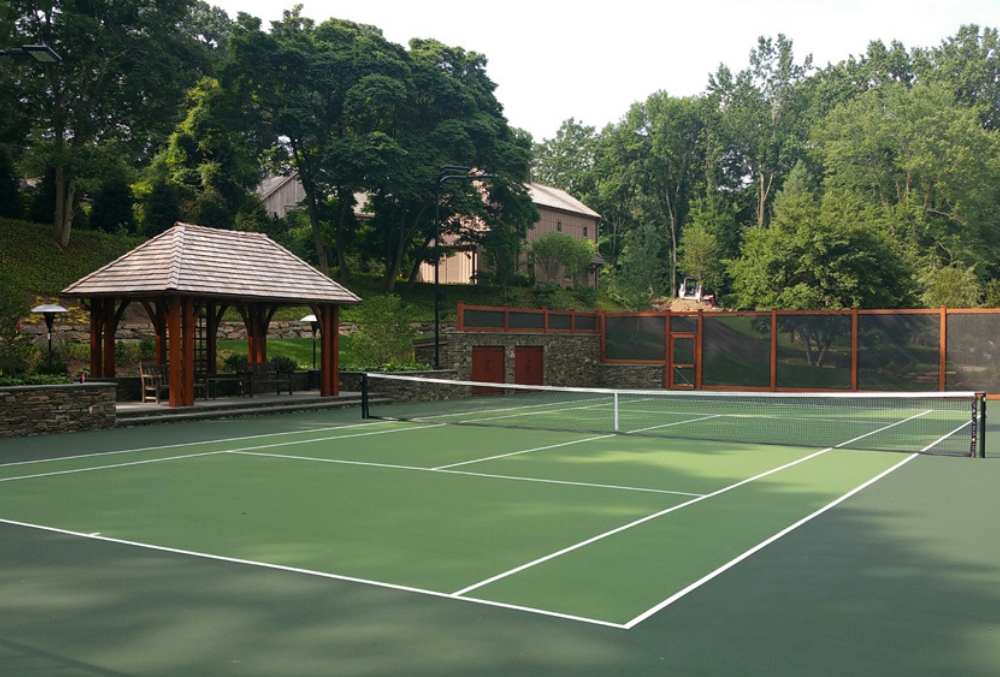
Built for the Long Haul in Central Texas
Austin’s climate is hard on outdoor surfaces. The heat is intense and sustained. UV exposure fades inferior coatings in a single season. Temperature swings between summer and winter create expansion and contraction stress that can crack a poorly constructed court slab within a few years.
A properly built court — concrete substrate, professional acrylic surface system, and certified installation — stands up to these conditions reliably. The Nova Sports U.S.A. SportCoat system is specifically engineered for climates like Central Texas, with a flexible acrylic formula that accommodates temperature movement and a UV-resistant coating that maintains color without annual reapplication.When the court is built right, it becomes a fixture of family life rather than a feature that deteriorates into a regret. This is why so many Austin homeowners are moving away from passive lawns — as explored in our look at why backyard sports courts are replacing traditional lawns — and choosing instead the kind of all-in-one active backyard setup that works for everyone in the household.
Make Your Backyard the Place Everyone Wants to Be
If you’re an Austin homeowner ready to build an outdoor space that keeps your family genuinely active together, call Sundek of Austin at 512-928-8000 or get a free estimate online. We serve Austin and surrounding Central Texas communities including Westlake Hills, Lakeway, Bee Cave, Cedar Park, Georgetown, Round Rock, Dripping Springs, Buda, Kyle, and San Marcos.